the bewildering world of a 1960’s childhood
told in verse — from the perspective of a tomboy
1 The Catch
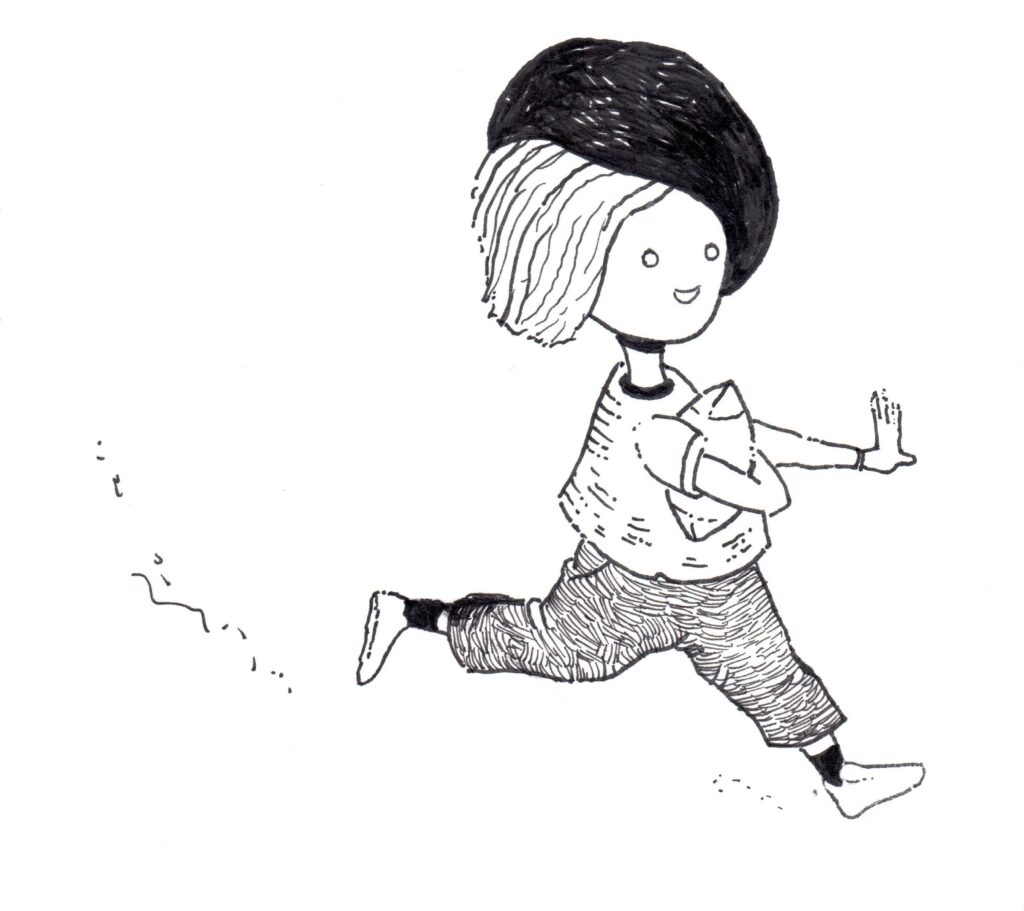
The peewee football was just out of reach
taunting me to leap high,
higher still
up into the sky.
The soft grass was my springboard
propelling me to soar further
than any five-year-old could rightfully soar.
Airborne, my left hand clawed at the muggy air
until I felt fingertips graze the ball.
Instinctually, I grabbed enough of it
to tuck it down
solid
into my chest.
It was a beautiful moment.
It defined me.
I didn’t know the word at the time.
I was a tomboy.
2 The Move
Life made perfect sense that summer,
that summer of sixty-two,
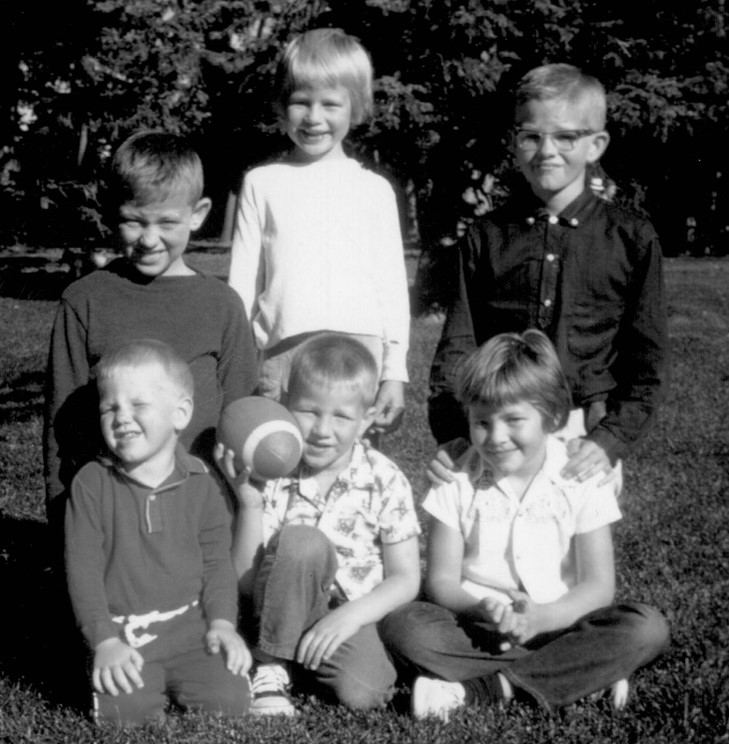
when my two parents, my four brothers
my one sister and I
left a farming town behind
for a modern city suburb.
I don’t remember much about the move.
I remember even less about the town.
It seems my memory switched on
when I caught a fine football.
3 The Game
We played across two front yards.
Sometimes I was the quarterback,
the kids would yell, “one elephant, two elephants”
and the pressure would mount
to find an open kid
to throw a perfect spiral.
Sometimes I was a receiver.
The kids would form a wall
of spindly arms and dangly legs
and the pressure would mount
to sweep by,
sweep on by.
I was small and skinny
but this was not a weakness
for I could run and deke
and sidle through,
untouched
unseen, into the endzone —
a mess of pure adrenalin
a mess of pure exhaustion
a mess of pure joy.
4 Schoolyard
The game hadn’t changed
but the rules had —
On the playground I learned
that boys play football
that girls play jump ball
that boys throw spirals
that girls paint toenails.
As I tossed a red rubber ball
underhand
between my legs
the luster was gone
the leather was gone
and life no longer made perfect sense.
My education began
not in a classroom
but on a school playground.
5 The Classroom
The longer I stayed in school
the less I understood.
Why —
did the girls like the skirts and tights
and not the jeans and flannels
Why —
did they like the pointy shoes
and not the slouchy runners
I began to see, a little sadly,
there was something wrong with them
or
there was something wrong with me.
6 The Gift
One fine day, out of the blue
I received a present from my mom.
She said they were a new thing.
She said they were popular with girls our age.
I opened the box and there she stood —
a skinny, busty doll with tiny feet
and the smallest waist I’d ever seen.
I’d only ever had a baby doll
that was cuddly and floppy
and smelled just right.
As I stared at the hard, plastic lady
that I held in one hand
I remember wondering,
What the hell do you do with it?
7 Home Ec
Once a week we were bussed
to a different school
where the boys were taught to use tools
and the girls were taught to sew and bake.
I wanted to make the birdhouse
and not the gingham apron,
but once again, there was no choice.
I remember the cake best —
the pineapple upside-down cake.
It was just tasty enough
to make me think for one day, just one day
that we were the ones
that got the better deal.
8 Home Ice
I could count on home
when summer turned to winter
and football turned to shinny.
I could count on home
where a hard icy road was our rink
where the goalposts were snowballs
where our skates were felt-lined boots.
For when we scored
on a dim-lit night
there were no rules,
there were no genders.
We were all in the NHL.
9 The Hockey Stick
It stood in an old, musty hardware store.
It wasn’t just any stick,
It was a curved stick,
covered in a layer of dust,
hiding its beauty, hiding its power.
I wanted it badly.
I spotted the grimy old sticker.
Two bucks. Two bucks?
I had two bucks.
When I got home, I cleaned it.
I taped it. I tucked it into bed.
I was so damned excited
I slept with it.
Fifty years later
I still get razzed about it.
But it was the best two bucks
I ever spent.
10 Girl-Skates
There was a skate swap at the school.
Used skates were spread out on tables.
‘Girl-skates’ were on one side,
‘Boy-skates’ on the other.
I wanted to try on the boy-skates.
They made more sense,
they didn’t have picks,
they didn’t flop over.
But the unspoken rule
was present in that room
and so I moved along to the ‘right’ table.
As I hobbled around the bumpy ice
In my new, limp skates,
I watched the effortless ones,
gliding backwards and forwards.
I never did get the hang of skating.
My parents blamed weak ankles.
I liked to blame the girl-skates.
11 Baseball
As a tomboy
it only made sense
that I would find baseball.
As a girl
it only made sense
that I wouldn’t find a team.
And so, I found the only thing left.
I “played catch”
— to the point
I could catch anything.
— to the point
the sleeve on my throwing arm
became tighter than the sleeve on my catching arm.
There was no better badge,
there was no better honour
than my tight sleeve.
12 The Shirt
It was a hot summer day,
blistering hot.
The boys whipped off their shirts.
I wanted to, too.
I wanted that taste of freedom.
I wanted that airy feeling.
And so, I whipped mine off too.
It didn’t last,
and it didn’t taste like freedom.
My sister took me aside.
“You should put your shirt back on.”
I already knew.
Of course, I knew
but it wasn’t fair.
I was as flat-chested as any boy with us.
So why?
Why did I
have to put my shirt back on?
13 Grey Cup
My parents didn’t watch sports
or play sports
or have an interest in sports.
They preferred
to watch the news,
sip instant coffee
and smoke du Maurier cigarettes.
Curiously, they rented a colour tv
one Grey Cup day.
And so we sat and so we watched
with popcorn and chips
as if we had always watched.
When the Roughriders won
after fifty-three years,
we weren’t that moved by the win
we were way more impressed
by the colour tv.
14 The Opportunity
On a brave day
in my first year of high school
I tried out for a team,
a real team,
the junior girls’ softball team.
I never told a soul.
All those years
of backyard catch
had paid off.
The coach took me aside.
I’d made the team!
Before I signed
before I got the uniform
before I got the number
I dropped out.
There was no way.
I didn’t have the confidence.
I never told a soul.
15 Confidence
Over the years
I moved on
to other sports,
to solitary sports
that suited me, that fit me
that asked for
a different kind of confidence.
I discovered cycling
and kayaking
and cross-country skiing.
I still do these things.
I still love these things
— creaky knees and all.
On special days,
on long, hard physical days
I still can be —
a mess of pure adrenalin
a mess of pure exhaustion
a mess of pure joy.
16 Dreams
Dreams don’t die.
They never do,
until they get fulfilled.
I was fifty-something
when I found the ringette group.
It wasn’t hockey
but it was close enough.
I emailed the group, “I can’t skate.”
“Can I join anyways?”
They said yes, and welcomed me
with open arms.
I felt a need to prepare.
and signed up for “learn to play hockey”
I was the only over-fifty participant.
The rest were teenage girls.
We’d skate hard, drop to our knees,
slide on our bellies, get up
and do it all over again.
They might have wondered about me.
I have to say, I wondered, myself.
17 Boy-Skates
The group was called White Lightning.
We played hard and we played fast
on a small-town rink
on late Friday nights.
At the end of the night
we’d gather in the dressing room,
half-dressed, sweating like pigs.
We drank ice-cold beer
— like pros.
One year we ordered jackets,
team jackets.
I ordered my jacket.
It’s black and white,
and has stitching on it.
White Lightning,
Number 18.
I finally got my number.
I finally got my boy-skates.
It took forty years,
but dreams don’t die,
until they get fulfilled.
18 Changes
We grow up, grow older,
become Moms,
and then we watch our own kids
figure out their own dreams.
It took one generation
only one generation
for the opportunities to change
for the rules to change.
Every sport was open to my daughters
They took it for granted
but I didn’t. No, I didn’t.
It felt good to see the opportunities.
It felt good to see the change.
It felt good to know
that the tomboys would be okay.
The tomboys would be okay.
About the Author, Karen McKinnon
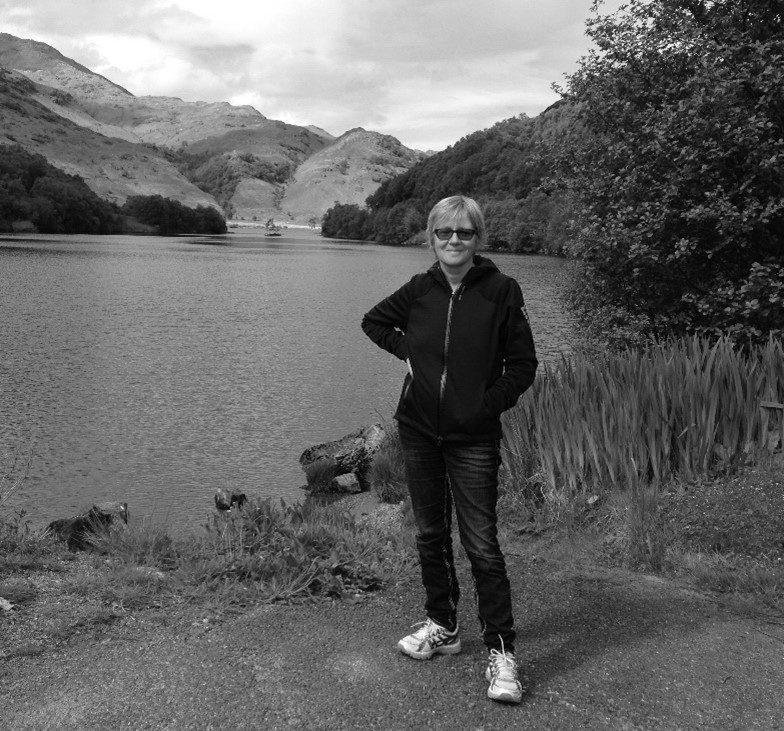
I was born in Cupar, Saskatchewan in 1957, and moved with my family to Regina the summer I turned five.
I lived in Regina until I was eighteen, and then spent time in various provinces before returning to Saskatchewan in my early thirties to raise my own family.
I now reside in Vernon, BC, where I enjoy walking and cycling on the many trails, and paddling my kayak on Okanagan Lake.
postscript: Since writing The Tomboy Poems, a new love has entered my life – the love of pickleball. I guess a new poem or two will need to be written soon.
Comments can be sent to my email at kamckinnon@yahoo.com